

Today’s newsletter will use a different format than you’re used to. Let’s call it an experiment to keep improving Sidelined. We hope you like it…
Abstract XP
Designing an incentive system is “easy”. Designing one that survives in practice is much harder. Abstract (ABS) XP is a living experiment in that challenge, an evolving system that has been trying to crack the code of rewarding “real participation” instead of behavior that simply farms the metric (in this case, XP).
What inspired this topic?
Last week, we had the chance to speak with Raj on Sidelined, the Ecosystem Lead at ABS. During the conversation, we touched on the topic of XP. After the interview, I went down the rabbit hole and found that it’s a controversial yet complex issue within the community.
So today, we’ll walk through the what, how, and why of XP, the changes behind, and the criticisms to understand what we can learn from large-scale incentive design.


The Verse8 x YGG Play Casual degen Game Hackathon is now live!
How to participate:
Vibe code your game idea to life on create.verse8.io
Publish it with the #YGG tag
Submit your game on BuidlHack 2026 Ludium Portal before April 16th
There are $5,000 in prize on the line, intros to investment opportunities, and a chance to become part of YGG Play’s publishing pipeline
Sponsored by YGG Play


Incentive Design and Goodhart’s Law
“When a measure becomes a target, it ceases to be a good measure” ~Charles Goodhart
Like almost any incentive system in crypto, Abstract XP couldn’t avoid becoming “the target”. After all, the majority of ABS users’ goal has been to increase their weekly XP rewards since the start.
Note that I don’t believe you can fully solve this, because motivations in crypto are primarily extrinsic (financially driven). Targeting and attracting a less EV-sensitive (Web2) crowd at a later stage of your product is one of the few ways to reduce how aggressively the measure becomes the target.
That said, I do think there are a lot of valuable takeaways from how ABS designed XP.
What’s Abstract XP?
To answer this question, let’s start with what the goal of Abstract XP is, according to Raj: “We want to incentivize users to come in and actually explore the ecosystem […] we want to make sure that we’re rewarding people who are actually participating onchain”.
We understand that XP is tied to a (potential) airdrop at ABS’s TGE. Therefore, it functions as the chain’s “carrot” to seed attention and encourage users to explore apps, bridge over, and spend, similar to other L2 incentive programs that have launched, like Blast Points and Gold.
At a high level, here’s how XP works:
Weekly XP is earned based on your (onchain) behavior, including using apps, minting NFTs, swapping tokens, streaming, and holding assets in your Abstract Wallet based on the past 7 days.
Holding specific Discord roles or Pudgy Penguin-related assets (NFTs or tokens) grants XP bonuses.
As users gain XP, they progress through three ranks within XP Tiers.
For example, I’m ranked Gold Tier 1. If I surpass Gold Tier 3, I’ll level up to Diamond Tier 1.
Users can obtain badges to showcase on their profile and collect extra XP. Badges are essentially chain-wide quests, and come in 3 types:
Flash Badges: require users to complete a task within a limited time.
Normal Badges: always achievable and visible, such as connecting your Discord account.
Hidden Badges: not visible but can be earned by completing specific actions.
More recently, the Perks feature was rolled out. Perks are app-specific offers (incentives) presented to users of a specific Tier.
For example, Ruyui granted a free 7-day Guild Pass from Roots of Embervault to players in the Gold Tier and above.
They also recently introduced an Upvote Streak mechanic, which grants users an additional XP boost after achieving a 30-day streak.
XP → Social Cards
An aspect of XP we shouldn’t overlook is the shareability of the reward through social cards. Within the ABS profile, users can easily generate an XP card to share with their friends and followers. The higher this number, the more “flexing value” it creates for the user. It’s social capital that drives awareness around ABS and adds a competitive layer to earning more XP than your friends/followers.

XP: A Monetization Layer
While XP is an incentive system, it also functions as a monetization layer. Users are willing to spend to gain additional XP because they believe this spend will outweigh the future rewards, whether XP (i.e., an ABS airdrop) or app-native rewards.
The underlying assumption is that these pre-TGE incentives will eventually translate into a higher return on spend. In other words, users are effectively “spending to earn more.”
A good example of this is Gigaverse, as illustrated by Hunter’s post:


A useful datapoint to contextualize this comes from Pixels LiveOps: “Extractors and spenders in Pixels are 98.8% overlapping - the real divide is between pure extractors and power users”.
The takeaway is that spending players aren’t fundamentally different from farmers. They’re still optimizing for extraction, but simply have more capital to do so.
Takeaways from Abstract XP:
Some takeaways from XP that can be applied to other incentive programs:
XP is rewarded on a weekly cadence, based on the user’s activity over the past 7 days. Within this activity log, the amount of XP rewarded per action is unknown. If it were transparent, users would simply optimize for what generates the most XP. That’s why this type of black-box design is necessary. At least part of your incentive program should function similarly.
Everyone who’s ever played video games is familiar with XP as a progression mechanic. Calling it XP, instead of something more direct like “points,” creates a layer of abstraction between XP and a (future) reward. This makes it feel more integral to the platform.
The Tier progression system is a vital component of XP. It creates short- (Gold 1 → Gold 2) and long-term goals (reaching Obsidian Tier), which make the platform stickier. Furthermore, Perks can feel like complementary rewards for achieving certain Tiers, reinforcing the joy of progression.
Create systems that enforce habit formation. ABS’s example of this is the Upvote Streak, which functions similarly to a daily login streak. A user who returns every day is more likely to spend more time on the platform, try out more apps, and spend more.
Badges disrupt existing behavior and incentivize users to use the ABS portal and its apps outside of their usual hours and set of apps. It’s a strong cross-ecosystem distribution mechanic that also works at an app level to incentivize usage of specific features.
Make progression and achievement easily shareable through social cards. They might feel overused, but social cards are social capital because they often translate into engagement. That will always have value.
As mentioned, XP is both an incentive system and a monetization layer. Start thinking about how these can amplify each other, and how this allows you to introduce monetization to your game or ecosystem at an earlier stage (to extend your runway).
Another source I can recommend on incentive design is Hunter’s “Do’s and Don’ts for Play-to-Airdrop Campaigns.” While this resource is almost two years old now, it still holds many valuable insights that can be applied to any reward program today.

Changes to Abstract XP
The ABS team has made it clear from the start that XP “is an evolving system.” This is part of its (initial) strategy to “smoke the farmers”, i.e., disincentivize users from min-maxing XP rewards through more sophisticated, evolving, and value-aligned reward design, rather than direct and predictable incentives.
Since ABS’s launch, various changes have been made to what behaviors are rewarded and by how much. Here are some examples:
Initially, XP was highly curated and granted to a small set of apps, NFTs, and streamers.
In July 2025, XP was updated to better reflect memecoin holdings.
In October 2025, they introduced XP incentives for LPing to major pairs.
Also in October 2025, another overhaul was made to Abstract XP scoring.
More recently, a major change shifted XP rewards from general chain participation to primarily onchain activity (app interactions, trading, and DeFi). This decision was driven by the fact that offchain transactions have no costs attached to them and therefore get “botted to death,” as well as the goal of bringing more users onchain.
Last week, the team decided to double down on this change. As Cygaar put it: “We are going to further scale up teams that are building onchain and reduce those that are not.” To further align XP with the value brought to the chain.
XP for Holding NFTs
One of the more controversial changes (more on this later) in these XP updates is the nerfing of rewards for holding NFTs. In the clip below, Raj explains what drove this decision.

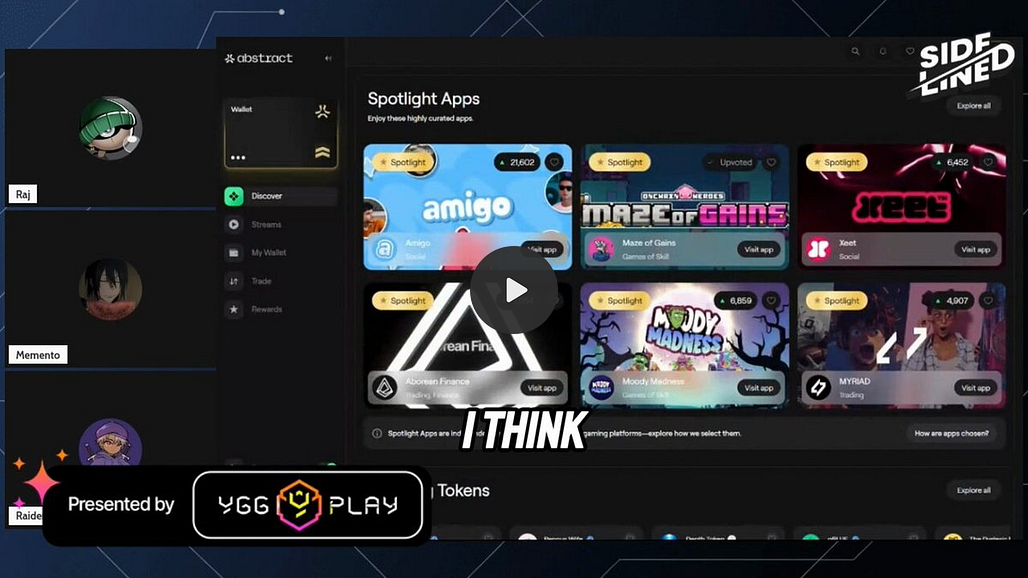
"It was a user saying: I've done nothing on Abstract for the last 8 - 10 weeks, but I still get around 80 - 100K XP, because I just keep my assets there […] This is doing a disservice not only to the user, but also to the apps we have..."
The misalignment of incentives here not only led to shallow engagement but also distorted where attention flows. From a value perspective, there’s relatively little value for a chain in a user who passively holds an asset. Other than “protecting a floor price” and, in a few rare cases, building community, it doesn’t create any new volume or attention.
Cygaar added that holding is now far more balanced, as they previously allocated a lot of XP to teams (with NFT collections) that don’t even exist anymore. This signals that XP is gradually shifting from holding to activity, because that’s what better aligns users with the ecosystem.
Retroactive Analysis
Cygaar has said that the team will conduct a retrospective XP analysis at some point. This includes reviewing XP amounts, badges, time spent on the chain, apps and activities used to earn XP, and tracking Sybil activity.
To add, it’s in their best interest to align XP as closely as possible with the value brought to Abstract, because it’s tied to a (potential) airdrop. Teams often underestimate how important the quality of users receiving this initial token distribution is relative to TGE performance.

Criticisms of Abstract XP
Note: I understand there are more criticisms of XP, including unpredictability, bots, unfairness, and more. However, the two issues discussed below seem the most relevant.
Misalignment about NFTs
The tweet below is a quote from Ely, reflecting on how XP has evolved since October. Luca shared the following in this video (as shown below):
"Holding is the most +EV thing that users on the chain can do for us. I reward holding more than anything"


Naturally, this prompted users to accumulate and hold (more) tokens and NFTs on the chain, with the expectation that their “loyalty” would be rewarded more than if they sold (especially if they were in profit).
It’s a behavioral bias of loss aversion. By selling today, users feel they are “giving up” potential future gains, which are often believed to be higher than they actually turn out to be. For this reason, many have “round-tripped” their gains (myself included).
While XP was heavily rewarded for mere holding in the past few months, as we talked about, that system is now changing (and being reduced). With the majority of these asset prices down, often significantly, this hurts bagholders even more.
Of course, we don’t know whether these users will be compensated with a larger airdrop for accumulating, say, hundreds of thousands of additional XP. However, some napkin math suggests that it likely won’t, especially if they could have made thousands of dollars simply by selling earlier.
Cygaar offered a counterargument, stating the following:
“The market has also changed significantly since this video was recorded, we would be foolish to not adapt to what's happening in real time. I've mentioned many times that the XP system is dynamic, none of this should be a surprise.”
What’s the takeaway here? It’s best to be careful with what you promise and communicate, because that shapes expectations. These expectations are further inflated by what we’ll talk about next.
A Lack of a Clear Timeframe
Let’s start with a quote from Hunter’s article we referenced:
“One major pitfall is running campaigns for an undisclosed amount of time. It is wise to let people know upfront what kind of time commitment you’re asking from them. It can create a lot of frustration if teams keep farming their community endlessly without any indication of when it will end.”
I believe a lot of frustration from the ABS community comes from waiting without an end in sight. After a year of using the portal and its apps and spending on them, combined with no clear timeline for a TGE, users begin to feel fatigued. For comparison, Blast’s campaign took 3–4 months.
This frustration is further exacerbated by the fact that an initial (soft) TGE timeframe of Q4 2025 was pushed back, driven by the team’s unrealistic expectations of going for a “$20–$30B home run.”


As time passes, ABS continues to accrue “expectation debt”: the longer a promise (TGE in this case) takes to deliver, the larger the gap between reality and expectations becomes. In turn, this creates significant execution risk.
Furthermore, this gap only widens as you get players to spend (in their eyes, “invest”). Interestingly, users also begin to feel entitled to an airdrop or compensation in the form of rewards once a project starts generating revenue.

Closing
Abstract XP shows that incentive design isn’t something you perfect in one go. It’s a continuous process of adaptation to maintain alignment between users and builders.
Here’s everything we talked about in a compressed format:
Every incentive program will be gamed. Design with that assumption from day one
Don’t over-reward passive behavior (holding), reward actions that create value
If users can see the optimal path to farm rewards, they will optimize for it
Make the incentive program feel like a game, in which users can progress
Make achievements visible and shareable. Status is a powerful motivator
Short-term goals drive engagement, long-term goals drive retention
Monetization and incentives should reinforce each other, not exist separately
Incentive systems must evolve to adapt to how they function in practice
Align rewards with value creation, not just activity or retention
Be thoughtful in what you communicate, as users will optimize around your messaging
Time-box your campaigns or clearly communicate timelines to avoid expectation debt
The larger the gap between expectations and reality, the higher the execution risk
Your early users will shape your token distribution, meaning quality matters more than quantity
In crypto, incentives don’t just shape behavior, but also shape expectations
Disclaimer: None of this information should be taken as financial advice. My writings only represent my personal opinions. DYOR. I will hold some of the assets mentioned in this newsletter.