


We’re happy to announce the first sponsor of Sidelined: YGG Play!
Across our show, Telegram, and this newsletter, we will highlight what’s happening in the YGG Play ecosystem.
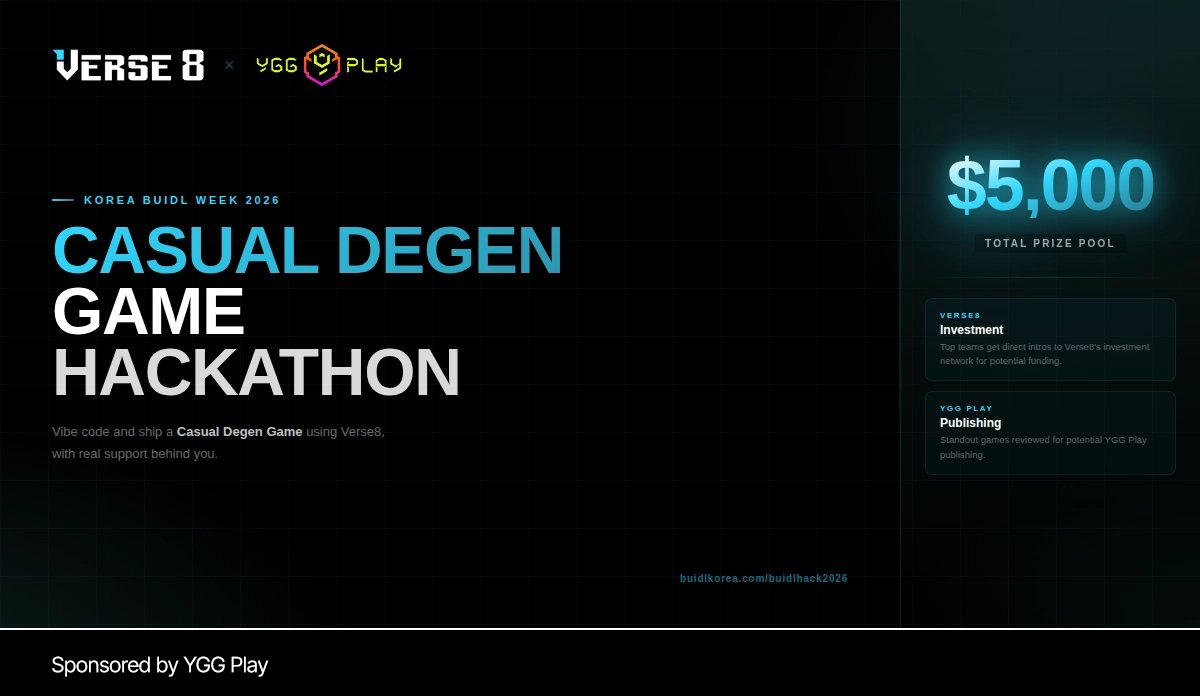
This week, we want to let you know about the Verse8 x YGG Play casual degen game hackathon. A vibecoding competition that allows anyone with a cool game idea to bring their imagination to life.
There are $5,000 in prize on the line, intros to investment opportunities, and a chance to become part of YGG Play’s publishing pipeline. For more info you can attend the BuidlHack 2026 Kickoff AMA tomorrow.

MARKET TALK


BASKETBALL.FUN IS NOT THAT FUN ANYMORE…
Basketball.fun (BBF) “another rug shilled by KOLs”? This statement was the start of a post from Mando that went viral in the last couple of days, pointing out BBF’s lack of communication and lack of product, despite holding its first pack sale in January
Attached to the post was an image of 16 KOLs who were paid to promote the platform
Bando added to his Tweet: “The responsibility lies less with the KOLs and more with the marketing agencies…” In this case, the agency Arcadia was behind this campaign
Naturally, this sparked the conversation around an already hot topic: ad disclosures and paid partnerships. Moreover, the ethics behind shilling and who’s at fault here were part of it:
A self-named “onchain investigator” named Specter posted a list of KOLs that were (supposedly) paid for undisclosed promotion. Some of it seemed true. However, the comments were quick to poke holes and point out that some names on this list (1) did disclose the partnership, (2) didn’t get paid, or (3) weren’t part of this campaign all
When market sentiment turns worse, people often also get much more hateful when KOLs get paid. Something important to add here
And who’s here to blame? Arcadia (like Bando says), the KOLs, or BBF? It’s clear that BBF underdelivered so far, but you could argue that the other two parties could’ve done better DD as well. So, is everyone to blame?
Personally, it seemed obvious to me that this was a poor attempt to copy a different product that saw a great (initial) success. On the other hand, you could argue that someone couldn’t predict that this would end up being a “rug” (or is it even a rug?)
For context, BBF is very similar to FDF. Users buy packs containing player shares to build a lineup and trade. Based on the performance of their players, they gain currency, which they reinvest to buy more packs
However, this isn’t a playable loop yet. The marketplace to trade player shares has yet to go live. In many ways, this launch felt rushed, and now they’re paying the expectation debt of making people wait with nothing to show for
In contrast, FDF already had a playable product during its soft launch and only sold packs right before the official launch of the platform
BBF is also co-founded by Tristan Thompson, a former player in the NBA. Thompson has been speaking about his venture at blockchain conferences
But of course, we have learned by now that celebrity endorsement/involvement in crypto ≠ success
Interestingly, the BBF account responded to the chatter of the last few days. In the post, they went after Adam (founder of FDF), who has been sceptical of BBF: “Ironically Adam and his team have been “trying” to build a basketball product for months with no real momentum behind it.”
Furthermore, they suddenly realised they needed to be more transparent and shared what’s coming soon, including multi-chain deposits + the marketplace. The post also included a form for anyone who wanted their packs to be refunded
So, it seems like they’re dodging the rug allegations here?
I wouldn’t be surprised if 70% or more of the buyers ask for a refund
Lastly, it seems that there’s a recurring theme of projects failing that largely rely on “borrowed credibility”. Instead of BBF establishing credibility first through showing off a good product, they had to buy it (temporarily) through this larger KOL campaign. A reminder that KOL marketing should be an amplifier, not a starting point

DITH SHARES LESSONS ON MONETIZATION AND GROWTH
Around two weeks ago, we had the pleasure of speaking with Dith again on Sidelined (our first returning guest). Since we spoke with him in September last year, lots of things have changed for Gigaverse. During our conversation, we spoke about systems, monetization, growth, and tokens. Here are some of my favorite quotes and takeaways:
Building systems:
“From an early point, we recognized that we wanted to build certain things in our product stack that just aren’t available out there. We want to integrate this marketplace into the game, so we built Gigamarket. Then we wanted a way that we can swap offchain for onchain items…so we built our own swap system called Gigaswap. Now we’ve launched GIGABIT…”
As a crypto game, you’ll often need custom infrastructure to support your economy, because the tools are not (publicly) available yet. It seems most teams build their tooling in-house and then use it to create an infrastructure moat to support their own ecosystem (e.g., Mythical’s QuickTrade)
Why teams fail to monetize:
“It’s probably a combination of things…for many teams, it’s make or break. If you can monetize enough…even if you make mistakes…even if it’s a bear market or whatever, you can weather the storm […] If you don’t monetize, that’s the fast track to realizing that you’re out of gas here, and now you’ve lost attention too, so it’s even harder to monetize later”
Games take years to come to completion, and in crypto, they often don’t even reach a final stage. So, to increase your chances of survival, you need to start thinking about how to introduce monetization into an early stage of your game. I.e., what’s the “minimum monetizable game loop”?
The design philosophy behind Gigajuice:
“One of our most important metrics is getting people who buy Gigajuice to repurchase it…From a design perspective, we had this discussion…Look, from a SaaS best practice, you lock people into long-term subscriptions. He was like…we absolutely must not do that […] We intentionally did not call it a VIP subscription, and we’re intentionally not going to auto-renew”
Instead of the subscription-like lock-in, Gigajuice is designed to prove its value every (purchase) cycle. This way, repeat purchases are not a product of users forgetting to unsubscribe, but a measure of real product satisfaction
“Gigajuice is not sold from a traditional shop. It’s sold from a vending machine”
Growth within and beyond crypto:
“The game has to reach a stage in which we plausibly can go after mostly normie gamers. The audience that we’re interested in, who are a fit for the game, are real money gamers or high stakes gamers. They like to play games that feel consequential, maybe there is money on the line, or you’re trying to get rare items, maybe there’s a chance of losing items”
We often tend to forget that “rewarded play” (i.e., real money gaming) is huge in Web2, and crypto gaming essentially delivers the same premise. Going after these audiences (while leaving out the crypto terminology and friction) seems to be one of the pockets of growth with the most potential
“Part of our GIGABIT design was ensuring that we’re set up to reach people where they are and not force people to have to come to Abstract…”
Bridging = friction. With multi-chain onramps, you remove that friction and don’t box yourself into a single chain. You’re not just an app on Abstract anymore, but can expand your onchain TAM and reach audiences beyond
On games and tokens:
“Games can still have a token by all means. Games, consumer apps, gaming infrastructure. It just shouldn’t be used as the currency […] It shouldn’t be the central currency that the whole thing runs on, so if the price tanks, nobody cares anymore”
We appreciate Dith coming on the show again to share his new lessons, and we are excited for what’s next for Gigaverse. Are you building something exciting in crypto gaming/consumer? Then feel free to send Raiden or me a DM to get you on the show

ON THE RISE
Thousands, the platform behind Wildcard introduced the THOU token
KAST raised $80M in a Series A to open access to stablecoin payments to everyone
Disclaimer: None of this information should be taken as financial advice. My writings only represent my personal opinions. DYOR. I will hold some of the assets mentioned in this newsletter.