




TLDR :
The $16.5M Pokémon Card debacle
Gigaverse introduces GIGABIT
Anichess x Alibaba Cloud

🗞️ NEWS

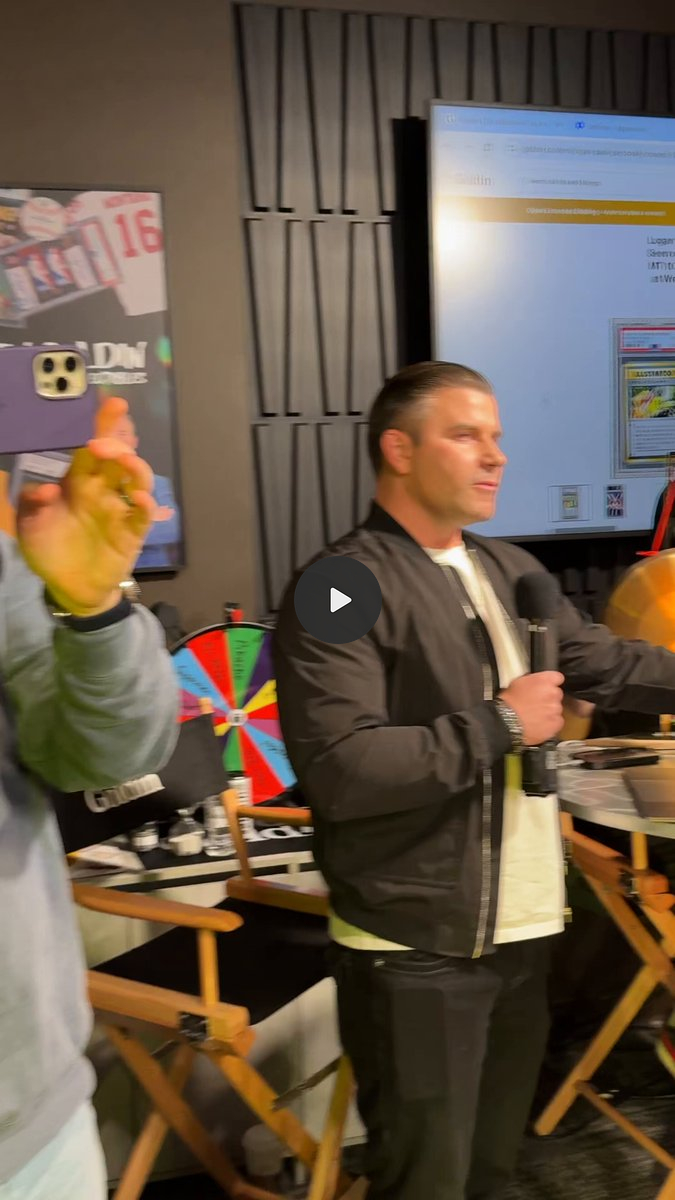
THE $16.5M POKEMON CARD
This week, Logan Paul set the world record for selling the most expensive Pokémon and trading card for $16,492,000. The only PSA 10 (more on this later) out of the 39 cards of the Pikachu Illustrator card in existence
Goldin led the auction for the sale, a marketplace for trading cards and collectibles, acquired by eBay in 2021. The platform took a 24% premium on the $13.3M hammer price, totaling $3,192,000
It seems that, just like Paul, Ken Goldin isn’t too much of a straight shooter either…
Paul bought the card back in 2021 during a private sale for $5.3M. In the same video, in which he told the story of his purchase, he announced that he will be selling the card on a platform (co-founded by him) called LiquidMarketplace (LM)
The card was fractionalized, i.e., ownership was split across 50,000,000 tokens, each selling for $0.10 ($5,000,000 in total). Logan would retain 49% ownership of the card, and the community would have the majority stake of 51%. It “was owned by the community,” and they could decide what to do with it
So, how did “the community” not benefit from the $16.5M card sale? Well…according to the ToS of LM, he had the right to buy the card back, which he did. In May 2024, he bought back the 5.4% share of the Pikachu Illustrator that was sold for $270K. The remaining 45.6% remained unsold during the auction, apparently
Purchasers were refunded and could withdraw their original investment in their LM accounts. But “for reasons outside of Paul’s control, the site went offline”. The LM website (or ShadcnStore template) is now live again for users to claim their refund
The Ontario Securities Commission (OSC) charged the executives of LM, including Paul, with “misappropriating investor cash” in June 2024
There’s a bunch of shady stuff here that concerns the misappropriation of $3M in funds, including hidden payments to shell companies, misleading statements to token purchasers, lies about card authenticity, and more
Regarding the card's grading (the PSA rating), there seemed to be some scepticism about it. xQc went over the details of the card and found multiple flaws, questioning the validity of the PSA 10 rating
Raiden did mention that cards can be regraded. And if PSA rated it a 10, it’s a 10. The process is also manual, so human error is possible: “A series of graders verify authenticity and evaluate condition using PSA's trusted 10-point grading scale”
The winner of the auction is someone named A.J. Scaramucci, the son of Anthony Scaramucci, a wealthy financier and former White House Communications Director. A.J. is the founder and managing partner of Solari Capital, which led a $220M funding round for American Bitcoin
After winning the auction, A.J announced he’s working on a new venture called TreasureTrove (Trove lol?), “a real-life Treasure Hunt”
His goal is to collect the rarest artefacts on our planet, including dinosaur fossils and even the Declaration of Independence
Lastly, it was worth noting the presence of the crypto bros at this event. 9GAG, Memecoin, and AceTrader received a shoutout. They were present because of their plans to enter the TCG World. Furthermore, the Azuki team seemed to be there to show Paul the Bucketman IP they’re working on

GIGAVERSE INTRODUCES GIGABIT
In Dith’s article “Tokens don't work as game currencies,” posted last week, he outlines his thoughts about game currencies, including how good currencies work, why volatile currencies don’t work, in-game financialization, and more. An appetizer for what we can expect from Gigaverse’s token
And so, just yesterday, Gigaverse posted an article, “Introducing: GIGABIT”, an outline for the game’s proprietary currency. Let’s dissect it…
So, what’s GIGABIT?
It’s a token that can be traded cross-chain, without any bridging required:
“…a player who joins the game on Abstract can trade with a player who joins the game from any other chain such as Base, MegaETH, Ronin, and so on”
By not boxing itself into one chain, this opens up the (onchain) TAM massively and removes all the friction of bridging. Similar to how Cambria allows on-ramps from various chains
It can be traded cross-platform, without ever needing to own any crypto:
“…an onchain player on Abstract can trade with a player who joins the game from, say, Steam, or a dedicated mobile version of the game, in the future.”
I.e., the system is also built to scale to Web2 audiences
GIGABIT has a stable exchange rate:
“Every 100 GIGABIT onboarded into the ecosystem (purchasable with $1) can be cashed out for $0.8 in USDC, with $0.15 from the margin funding player rewards.”
It’s very similar to Roblox’s Robux model, which Dith goes into in his article. By controlling the spread, they can maintain their own margin (5% in this case) to fund development, growth, and anything else + sustainably reward players (without inflation)
It’s a strong incentive for players to keep their GIGABITs on the platform, increasing the likelihood of the currency being spent (but, at the same time, also a disincentive to onramp)
And if a player decides to “extract”, a chunk of that value recirculates back as rewards, further strengthening the holder and spender loop
Instead of players/holders speculating on the token price, the risk <> reward mechanics will exist elsewhere:
“Gigaverse will continue to introduce risk <> reward mechanics and fun “opportunities for gains” in many ways, starting with a competition we’re launching in a couple of days…”
From Dith’s article: “There are many ways to financialize your game and let players enjoy arbitrage opportunities, yield, risk / reward mechanics, the potential for ROI and so on, WITHOUT introducing a volatile game currency.”
Through this system, the token isn’t a separate product from the game, as it unifies the two. The game’s success isn’t judged on the token’s performance, but purely on its ability to attract players and volume, and monetize
Volume drives rewards
Per GIGABIT’s model, the more players spend, the larger the player rewards. Incentives will differ per game mode and activity. There will be liveops, including timed events + special competitions, and ongoing reward loops
So, the reward pool is both fueled by off-ramp fees + GIGABIT spend (incl. the marketplace, shop, competitions, and wagering)
Players will be able to on-ramp using crypto (USDC) from any chain or fiat (coming later), and off-ramp in USDC
GIGABIT is scheduled to go live sometime this Friday and will launch alongside a Gigaverse Anniversary competition, “expected to see the largest amount of player rewards in Gigaverse delivered to date”
It’s mentioned that GIGABIT is one of the core systems that will form “Gigaverse 1.0” (the long-term version of the game), including new game modes, a long-term economic model, an open world experience, and more
GIGABIT is much like any (traditional) in-game currency: controllable, stable, and frictionless. Only the on and off-ramping process involves crypto. You could see it as a “game-branded stablecoin”
Looking forward to seeing this experiment go live this week, and potentially setting a new standard for tokens
ANICHESS PARTNERS WITH ALIBABA CLOUD
This week, Anichess shared that they signed an MOU with Alibaba Cloud to develop “AliBAE (Build and Earn), a platform for the next generation of vibe coders and creators”. It will be powered by Qwen, Alibaba Cloud’s AI model
With the use of AliBAE, “anyone can build, and anyone can earn ($CHECK),” through publishing content and apps with vibe coding
The AliBAE.build website is live, and can be visited to claim a badge to redeem a multiplier. You can’t use the creator tools yet
You could call it a “decentralized publishing model,” which incentivizes the community to build experiences on top of Anichess and grow their ecosystem (similar to Roblox and Fortnite). However, the question is whether Anichess is large enough of a game/ecosystem to create a big enough incentive and attract talented builders
Just because AI tools now allow everyone to become a “developer” doesn’t mean that the content produced is always valuable. We’ve noticed this with the countless “AI masturbation” on the timeline (where are the apps?). As of now, vibe coding is much more useful for automating personal tasks than building useful apps
As a counterpoint, you do have platforms like Remix (discussed in GC News #126), purely focused on vibecoding mobile games. And some of the titles on there can be pretty enjoyable
Whether this is just a narrative play (like we have seen multiple times now in gaming) from Anichess to align itself with AI seems unclear to me. Developing tools like these can be a large undertaking on its own
My hunch is that they simply built an Anichess-branded wrapper for Qwen, bolted on some $CHECK functionality, and then made it sound bigger than it actually is. Of course, we have yet to see the tooling, and I’m just making assumptions here…
In terms of credibility, Alibaba Cloud QRT’d the announcement, but didn’t have any official press release
Despite my doubts, the price of $CHECK did pump on the news. It’s important to note that this announcement was paired with a UGC campaign that explicitly pushed creators to talk about price action
The pump from $0.067 to $0,10+ (+50%) has fully retraced now, with the current price being $0,066
So, is it all just narrative, or is there substance behind it? Time will tell. Yet, I remain sceptical about whether these future vibe-coded apps can add value to the Checker ecosystem
FLASH NEWS
The Sony Innovation Fund invested $3.2M in Record Protocol’s YOAKE
Sport.fun partnered with Polymarket: “Prediction markets are coming soon to SDF”

🆕ALPHA CORNER
Early Games: Debellum
Join our Telegram for daily updates & alpha as well: https://t.me/raidenalpha