



MARKET TALK


CASH CITY LAUNCH
Two days ago, another Ponzi game launched called Cash City. A browser tycoon game in which you manage firms, open packs, upgrade, and earn CASH tokens to “take your firm from the mailroom to the penthouse” (i.e., Addicted.fun, but instead of growing weed, you manage a firm)
Looks like Cash City took the theme from the (failed) Hedge Empire on Sophon, in which players had to “build their own trading empire”
Also, looks like the pack mechanics (gacha) in Ponzi games are becoming a new thing, started by Addicted
Cash City is a game by Longwood Labs, the makers of The Heist and Defi Dungeons
The Heist is a high-stakes, risk-based game with idle elements. Players had to stake their assets (NFTs) to generate resources, but could face RNG-based risks when claiming/unstaking their assets
The Heist launched in April 2023 and was live (or operated) until August 2025. Probably, until the team decided to shift its focus to Cash City and Defi Dungeons instead
Defi Dungeons is a fantasy idle-RPG in which players have to manage their (NFT) heroes, including dungeon runs, quests, and training them. In the game, players passively earn GOLD tokens
As part of its launch, the team sold both NFTs and tokens. Through the Character sale, 11,000 characters were sold for $325 (in SOL) each, raising over $3.5M in total. The token sale was held through a fair launch on Meteora, selling 10% of the supply for $3M (so $6.5M raised in total)
When GOLD launched, it opened at around a $130M market cap, but then saw an enormous red candle (like usual), crashing the price to ~$30M. For a week or so, it traded sideways until the (inevitable) trend down to zero happened. GOLD is trading at a ~$44K market cap today
To my surprise, the project was still receiving updates last December. After several content updates, the game looks quite similar to Defi Kingdoms now
With Cash City being launched, it does seem unlikely that the team will continue to put resources into a game that doesn’t monetize and has such a low market cap
That said, I would be surprised if the team spent more than $2M to build and liveops Defi Dungeons, thus far
Longwood Lab’s model is quite similar to Pandemic Labs, as both studios have launched and killed a couple of Ponzi games now. However, they also differ, as Longwood runs liveops for their titles much longer (although I’m not sure that’d is the case with Cash City), and doesn’t have a studio token
Moving on to Cash City, its token CASH TGE’d alongside the game launch. On TGE, CASH wicked up to around a $7M market cap (~18x lower than GOLD’s ATH), followed by a big red candle, and now it’s trading at ~$2M
There were no presales (tokens or NFTs). The way the game monetizes is by firms (1 SOL each), required to start playing the game. Players need to spend CASH to upgrade their firm. Furthermore, there are “intern and advisor packs” (gacha), selling for 200 (~$4) and 1000 (~$20) CASH tokens. Plus consumables
Through purchases in CASH, players improve their “efficiency”, i.e., the rate at which they generate CASH tokens
On the day of the launch itself, 1,000 firms were opened (1000 SOL in revenue). The day after, the team reported that 1.5M CASH has been emitted, and 5M CASH burnt. Despite burn > emissions by over 3x, CASH’s price remains flat
Someone also reported the team made $300K in token swap fees so far
Overall, after tracking multiple Ponzi games over the last few years, some patterns start to arise:
Almost always, the token peaks at TGE (by a margin) and slowly trends to zero
“I’m making $$$ per hour” posts (in a way, the organic marketing) are the best marketing to pull in more players to Ponzi games
We didn’t see much of that for Cash City in this case, likely explaining why it fell flat
FOMO is a strong emotional driver of early player adoption. As these games are always about being early if you want to make (significant) money
However, if that’s not the case (like Cash City), your early adopters won’t be able to shill the opportunity (and their referral codes) enough to get a second wave of users in (i.e., exit liquidity), and it falls apart
How big a Ponzi can get seems to be a mix of market sentiment (coins down = earlier profit taking), trust in the team, recency bias (what was the last Ponzi, and how did it do), reward emission rate, first mover advantage (speaking of chains) KOL vs. organic push, and, of course, the rate of new users and liquidity coming in (a Ponzi’s lifeblood)
Overall, unless the team decides to pump the token again, and so make earning more attractive, I think Cash City won’t make the end of this week

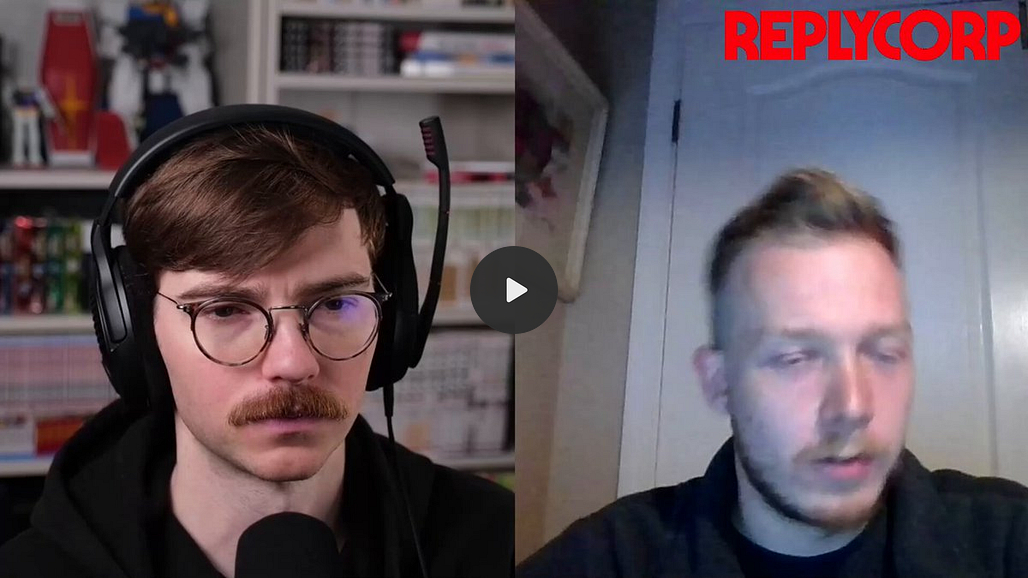
WE TALK WITH KIEFER ABOUT GROWTH
A couple of months ago, we spoke with Kiefer from ReplyCorp. Kiefer worked as a systems designer for crypto casinos and worked as an incentive consultant for Scopely, Cardano, and Wildcard, before joining ReplyCorp as a co-founder last year
The conversation we had focused mainly on growth and incentives, not necessarily in a gaming context, but the takeaways do still translate to gaming here:
On how to think about incentive design:
“For any given user, what motivates them to take a desirable action. That ties in when you’re talking about Web3, it ties in when you’re talking about Web2, so when you’re trying to get someone to spend, play, engage, hold a token, it depends a lot on the user and what they actually care about”
Behavior is driven by motivations, and motivation varies by user (even though it’s almost always financial in crypto). Good design aligns incentives with what each user segment cares about
Designing products without signups and onboarding:
“There are a bunch of studies that have been done by behavioral economists that show that even for things that people objectively want, and they know are really good for them, you think they would actually do, even a little bit of friction added to that process can prevent them from actually following through…”
Behavioral economics show that ease of use can drive behavior more than incentives. Especially when apps will expand beyond crypto, into less incentive-sensitive audiences (i.e., beyond farmers), reducing friction is key in conversion
“I was inspired by that (“Safe more Tomorrow”) to create a mechanism….where users can get a benefit immediately in exchange for agreeing that: “Hey, in the future, when the token launches, it can be staked for a little while, or you can stake it for even longer, because I want to benefit today, because I personally value whatever that thing is that I get right now, and I’m discounting that liquidity of the tokens in the future”. That’s a very important behavioral bias to think about”
What makes something self-propagating?
“To do this (have a K-factor higher than 1), you must bake virality into the core loop of the product”
“There’s also an important part of thinking about what is a meaningful incentive, that it’s important both for the person inviting and something valuable for the person that is being invited. It could be financial, it doesn’t have to be, it just has to be relevant to that particular scenario and valuable to them”
Some supportive data on dual-sided referral incentive design: “Users who received dual-sided rewards (both referrer and referee) were 3.2x more likely to complete multiple referrals.” ~NextBee
Overall, some great takeaways from Kiefer here. The next interview will be with Kate Irwin, in which we will talk about crypto gaming from a journalist’s perspective, so stay tuned for that

ON THE RISE
Sanko GameCorp winds down Sanko mainnet (dev for SankoQuest continues)
Disclaimer: None of this information should be taken as financial advice. My writings only represent my personal opinions. DYOR + I will hold some of the assets mentioned in this newsletter.
It's dengerous ?