In the past few weeks, you have probably seen a take like Ico’s on your timeline about “CT being dead”. Crypto posts are getting less engagement, various crypto accounts have pivoted to AI, and more worrisome is the lack of retail. While the latter is influenced by the bear market, the institutionalization of crypto and lack of “dumb money-generating events” (NFT-cycle, memecoin-cycle, etc.) play a role as well.
If you’ve been paying attention to crypto gaming over the past 2 years, you can also sense the disappearance of retail and the shrinkage of CT through the participation numbers of P2A campaigns. In 2023 - 2024, it was “easy” to attract 10s of thousands of players (and bots) to a campaign, but from 2025 and beyond, it’s hard to attract more than a couple of thousand players.
The audience that “lives onchain” isn’t growing, and it seems growth inside of CT is exhausted. The next pockets of growth for crypto (gaming) will be found outside of this bubble. So, where does that growth live? I believe it’s short-form content on the normie platforms (primarily TikTok).
When I talk about short-form content and crypto gaming, your mind might wander to the (yet) unsuccessful examples we’ve seen from a handful of crypto games that have already tried with this format.
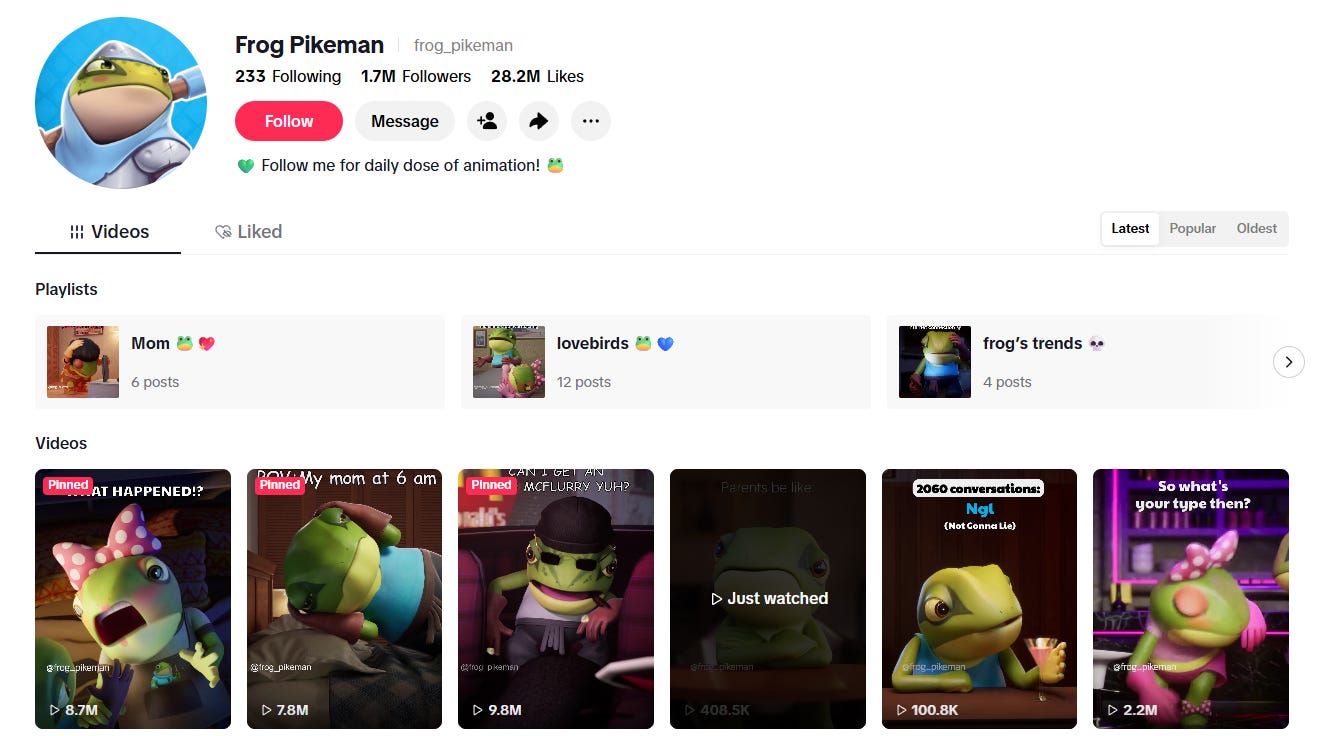
A glaring (and painful) example of this was AOF Verse’s TikTok strategy, which included building a library of short, relatable, and relevant videos centered around their character “Frog Pikeman”. This frog accrued millions of views, which led to millions of likes and followers.
Other crypto games, which achieved similar numbers, include:
These examples all used similar character IP-building strategies (except SuperTrip) to amass engagement. However, the more important question is: What does this brand awareness lead to? The videos don’t have any reference to the games that are tied to these IPs. You can’t capture interest in a game without showing gameplay. I.e. no funnel captures this massive amount of engagement and translates it to game success.
Introducing more game-focused content after building a following around a character is an option. However, the chances that someone who likes your character also likes your game enough to go through the hoops of playing it seem slim. It seems like a backwards process of trying to find your audience in an audience you already established.
Even though the costs of generating these videos are going down significantly with the usage of AI, it remains a costly operation, with seemingly little ROI. Unless you reach a large enough scale to subsidize production costs with creator payouts.
Pudgy Penguins
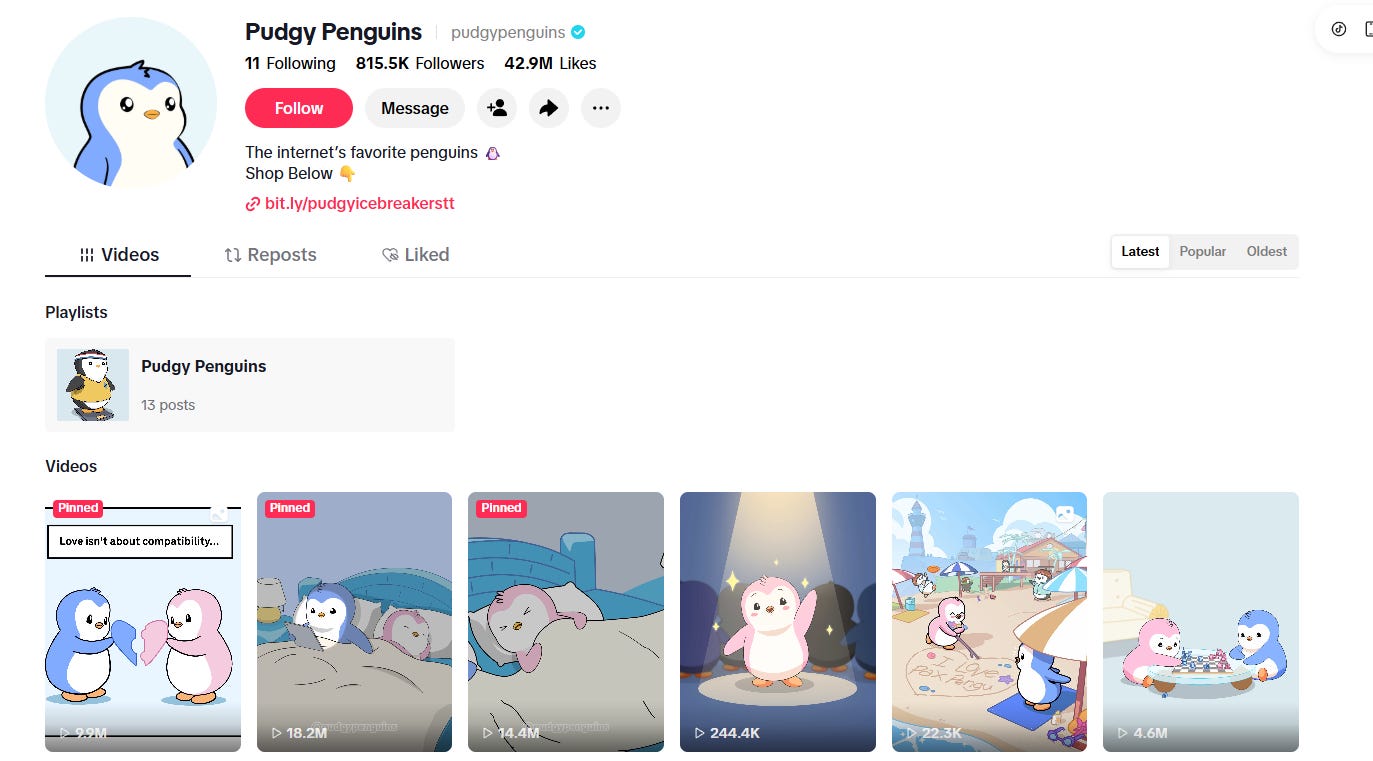
It’s important to note here that this is different from why Pudgy Penguins is doing it, the one who coined this strategy (in crypto). For them, an IP-building strategy with a focus on brand awareness makes sense because it’s one of the first touchpoints of the Pudgy IP, which can translate to an interest in a range of consumer-facing products later down the road.
Pudgy doesn’t directly advertise Pudgy World on its page, but the plushies in Walmart and Target have QR codes on them with in-game redeemables that might convince fans of the brand to try out the game.
I want to add here that Pudgy’s page did start to advertise its products more on its page recently, but these are collectibles, merch, and board games. I.e. products that make much more sense to market towards an audience that’s a fan of your IP than a game is.
The “New” Playbook
The “new” playbook isn’t actually a new way for apps to market themselves and convert views into users. Traditional (mostly tech) apps have been using it for years now, and in 2025, this form of advertising saw significant growth (popularized by Cluely). However, seeing it work inside crypto is new, and only started rising recently with the success of Polymarket and fomo.
This video taught me a lot when I started learning more about the topic:
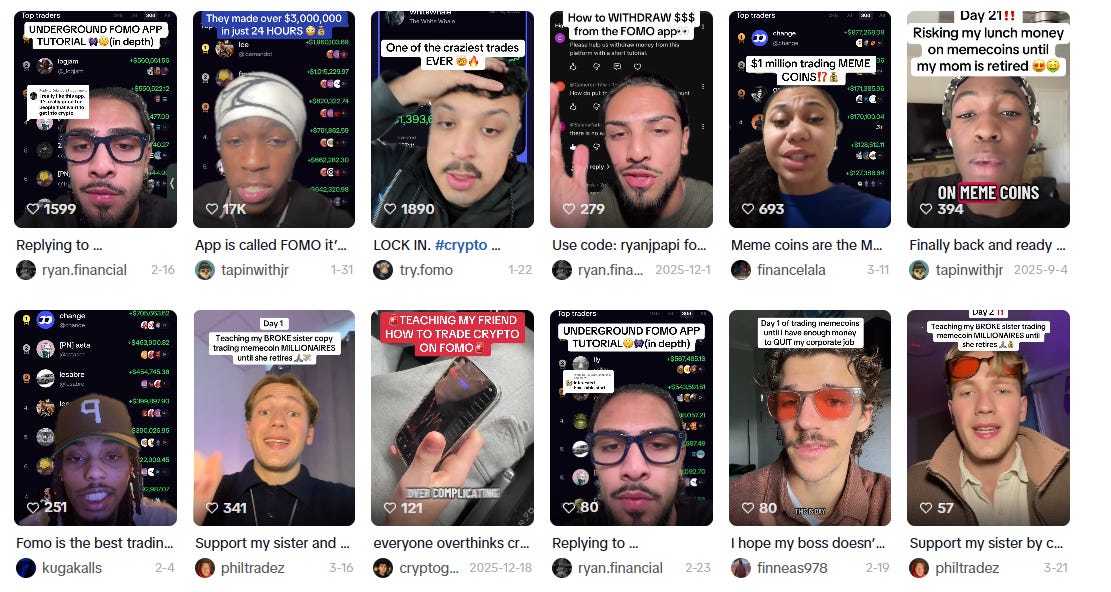
So, what is this playbook? It’s about UGC-ads. With this approach, creators don’t post content on their own accounts, but under brand-owned ones that resemble them. All they do is make (“organic”) content in the brand’s vein. The videos (or technically ads) need to feel like someone is genuinely sharing this app, in a way that a friend would text you.
As part of the UGC-ads, the viewer shouldn’t be able to detect that it’s an advertisement, because if they do, the video loses credibility and will be turned off. From an ethical standpoint, this is tricky because they’re technically a paid partnership, but “game is game”, I suppose?
Here’s an overview of some of fomo’s UGC-ads:
According to the co-founder of fomo, the platform has added an average of 3.3K users per day in 2026 (with ~900 being funded). He says that “probably most of these users” are coming from social platforms through referrals. Important to add is that almost all the accounts in the above example have referral links in their bios, which the creators actively use for the CTAs.
For years, there’s been a limiting belief and stigma that apps in crypto can’t scale beyond CT. But that idea is finally starting to crumble with apps like fomo (essentially Pump-fun with a better UI and UX) becoming a breakout success. It’s about positioning and applying crypto-based solutions that everyday people (consumers) care about. I.e., instead of talking to crypto nerds, you need to be relatable.
And don’t forget, that consumers are just as degen as we are:
From a high level, here’s how the UGC-ad approach works:
Establish an ideal customer profile (ICP)
Find a hook that works (steal and repurpose from your niche)
Find a network of creatives
Systemically test and post on TikTok and Instagram
Double down on the winners
Push winning formats through partnerships with larger creators
In writing, this playbook sounds easy, but the difficulty lies in the execution side of it (note: I’m still actively learning about it myself). According to my research, getting good results requires rigorous testing, finding the right creators, actively evaluating them, etc. If you want to learn more about the nuances and execution side of it, I can recommend this video by PlayKit.
Paraphrased from the video: “Treat UGC as an operating system, not a one-off creative project. The bottleneck is not “finding viral creators.” It is sourcing, briefing, reviewing, incentives, publishing, feedback, and tracking working as one loop.”
Applied to Crypto Gaming
There isn’t a crypto game that has figured out this playbook yet, or at least I’m not aware of it (let me know if you have seen it). What we can do is look at examples in adjacent niches, such as rewarded play platforms, like KashKick, Snakzy, Swagbucks, and others. The videos talking about these apps frame earning as “making money while being on your phone”.
In a similar vein, here’s a semi-viral example (600K+ views) of somebody playing Cash App’s Cash Apples game (essentially a P2E game). See how different this piece of content is from a typical video on crypto gaming. Have you ever seen so many emotions from someone earning a single dollar?
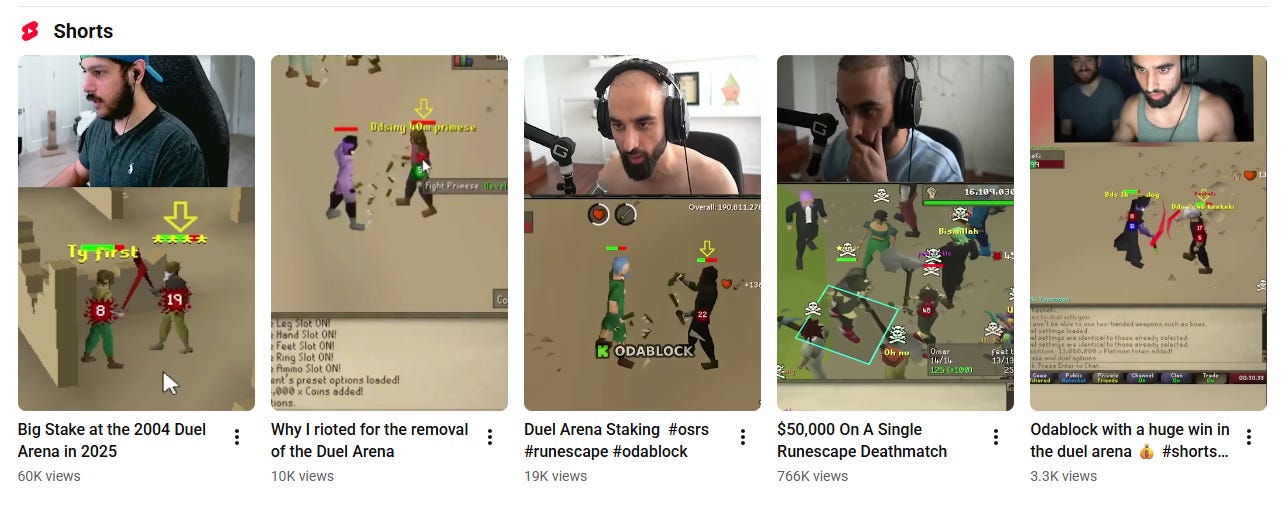
If I were to figure out a “consumer angle” for Cambria, for example, I would start by looking at formats and hooks used in performing YouTube Shorts of OSRS’s Duel Arena or in high-stakes PKing. Consumers aren’t familiar with terms like “Risk 2 Earn”, but they understand the gravity and thrill of risk and reward. Just look at the popularization of watching gambling and gacha (soft-gambling).
Any crypto game out there has a similar Web2 title that one can learn from. And the winning formula might be found in combining the best of two worlds.
Frankly, I think the biggest appeal to push crypto gaming is still through the lens of financialized entertainment. But that doesn’t mean growth shouldn’t be tested with different hooks, formats, and value propositions that are less money-focused and in line with your ICP (strategy games → strategy aspects).
Note: The average gamer is more anti-crypto than the average consumer. This is still a hurdle to overcome.
“Adapt or Die”
If I am being blunt and dramatic, it’s probably not an option anymore to solely focus on CT for any game that seeks beyond a couple of thousand players (games like Maze of Gains are the exception). This is also not new, and something people have been shouting for years, but only now we’re starting to see the urgency of it, due to the shrinking TAM (of CT).
Whether short-form video content focused on (non-crypto) consumers can be a viable growth strategy for crypto gaming remains to be seen. Nevertheless, it’s something you should start experimenting with.
Disclaimer: None of this information should be taken as financial advice. My writings only represent my personal opinions. DYOR. I will hold some of the assets mentioned in this newsletter.






 Tiktok failed to load.