



MARKET TALK


STILL FEELING BIRBISH?
Moonbirds (Mb) launched its $BIRB token last week, on January 29. A successful, yet controversial TGE, that had CT divided. To get a better understanding of the how, what, and why behind this launch, we will dissect it by looking into the distribution, GTM, narrative, and more
But before getting into that, I want to provide you with some context. The Mb IP got acquired in May 2025 by Orange Cap Games (OCG) from Yuga Labs, which was divesting from its secondary IPs. One year earlier, Yuga acquired the IP in an all-stock deal
OCG is the developer of Vibes, the Pudgy-licensed TCG ($6M in revenue in 2025). A studio that focuses on bringing IPs alive through product-led adoption
Other than Vibes, the company released Birbs Blind Boxes ($1.7M in revenue), Birbs Trading Cards, and Moonbirds Telegram stickers
Additionally, there are plans in place to introduce more mobile games
More recently, OCG shared that they’re planning to double down on collectibles and become the “Popmart of Web3” (in a way quite similar to Pudgy)
From Tiger Research’s report: “Rather than focusing on NFT distribution within Web3, the company aims to use Moonbirds as a starting point to acquire and scale multiple high-potential IPs, ultimately positioning itself as a diversified, IP-centric consumer business similar in structure to Pop Mart.”
Moving on to the token launch, let’s look at the distribution and tokenomics first. 65% of the token is “allocated to the community”, this includes the following buckets: Holder Rewards (27%), Ecosystem Partner Expansion (12%), Value Chain Incentives (10%), Liquidity (8%), and Innovation (8%)
25% of the supply went to the core NFT collections (Moonbirds, Mythics, and Oddities). These tokens will be unlocked over 24 months, with the first month being unlocked on TGE (1.04%). To unlock the remaining airdrop, holders need to “nest” their NFTs
It’s obvious here they want (need) to reduce sell pressure. That doesn’t mean the community was happy with the decision, as the price of Moonbirds fell from 1.75 to sub 1 ETH post-announcement (now, back to ~ 1 ETH again)
There’s also a mechanic called “Birb Game One” (it’s optional), which redistributes unclaimed tokens from the community pool back to players
Here’s how it works: “Character (Cr) with the most bets wins all bets on the second most. Character with the least, wins all bets on the second least. A bonus is then added on top prorata to your contributions, and the bonus is based on the unclaimed rewards from staking and sbt claims.”
It seems the other 2% of the Holder Rewards bucket went to the SBTs. This allocation was fully unlocked on D1
The token also got listed on Binance Alpha, meaning some tokens also got distributed to these users
$BIRB has an initial circulating supply of 28.5% according to CMC. But the real float (what’s available in the open market) is much lower. It’s also worth noting that the available information for this launch has been sparse, as there’s no unlock schedule or information on the utility of the token
On the token launch itself, $BIRB outperformed expectations. The token got listed at $0,20 ($200M FDV) and quickly climbed to a peak of $0,47. However, then slowly fell back to its listing price (during this brutal weekend), now trading at ~$0,20
Unfortunately, many users weren’t able to claim at launch due to technical difficulties. On the day of TGE, the claim site was taken down temporarily for a fix, 4 hours later, the $BIRB claim went back up again, but claiming issues persisted. To no ones surprise, this led to FUD on the timeline
It’s easy to understand why you need a flawless claim process, but often hard to execute
At its current market cap of ~$66M, $BIRB is trading higher than DOOD (~$33M), higher than Anime (~$32M), and lower than PENGU (~$477M). A 2x compared to Doodles and Azuki’s tokens, but still over 7x away from Pudgy Penguins’ PENGU
Of course, we do have to factor in recency bias (new token = better), plus the fact that time is the worst enemy of all tokens nowadays (i.e., they all trend down over time)
The $BIRB launch was pleasantly surprising, but far from perfect, with technical challenges, poor communication, and a lack of a strong case for “why token?”
I’m also curious about their next moves, and how they will expand on partnering with or acquiring existing IPs in crypto to continue to build their Pop Mart-like strategy

TAKEAWAYS FROM ARTO (TRIBALLY GAMES)
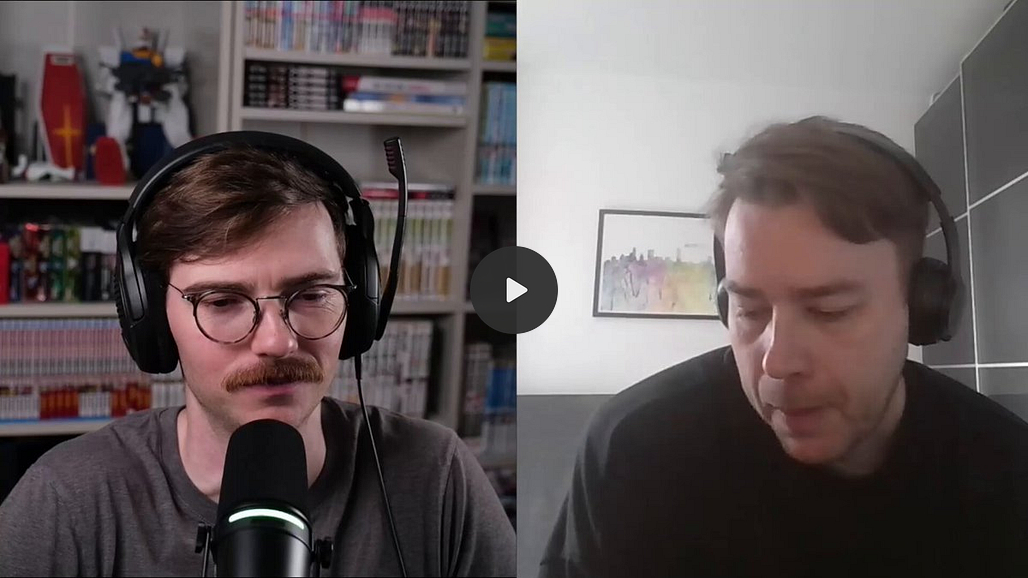
A couple of days ago, we posted our interview with Arto on the Wolves. Arto is the economy lead and co-founder at Tribally Games, the makers of the PvP team-building game Rumble Arcade (they just launched on Ronin)
Our talk mainly focused on Arto’s expertise in game design, economics, and real money in games. Here are my personal favorites from the conversation:
The familiar vs. the unfamiliar:
“What’s happened in a lot of game studios in Web3 is that they’ve taken a lot of familiar concepts (in game design)”
“We focused a lot on the unfamiliar, what’s new here, what’s actually different with financialization, empowering players to trade their assets […] it’s a very different space to be designing games in versus the familiar, Web2 paradigm”
Designing games with crypto requires teams to rethink game design from first principles, because player ownership and markets change how games function
Using an economy-first mindset:
“If you are, for example, doing tradeable assets. I wouldn’t say that’s a strict upgrade to assets that are not tradeable. It’s just a very different beast to be dealing with”
“We got an open economy, players can do things they weren’t able to do in the Web2 paradigm, they are also interested in things they weren’t interested in in the Web2 paradigm […] How do we make it work, and how do we make it powerful then? I think that’s a good starting point. You can walk backwards from there to reach gameplay patterns that aren’t that viable or interesting without these Web3 parts”
Open economies fundamentally change what players care about, so successful crypto games must be designed from the ground up around those incentives, not introduced as an afterthought
Money strengthening vs. money weakening game mechanics:
“With onchain rewards and financial motives, if you execute it poorly, the risk is that it overtakes player motivation. The goal we’re trying to shoot for is a healthy mix of motivations, so you still have intrinsic motivations as a player, and those are enforced because of fun things that are paired with onchain rewards…”
Onchain rewards should strengthen intrinsic motivation, not replace it with extrinsic motivation
Challenges in building crypto games:
“What has happened is a wave of negativity that has led to conclusions such as there’s simply no demand for these types of games”
“The players are there, but if you look at what’s been put out to the market…it’s a lot of rough, badly executed ideas. I look at those as an economy designer, and things don’t even work on paper”
Crypto gaming’s credibility problem can largely be attributed to poor design and weak execution
“Part of the illusion of Web3 fixes things, has gone away. You have to execute well, you have to design for this new paradigm, so you cannot just assume that you’ll do similar things with an open economy, and get good results…”
We appreciate Arto coming on the show and sharing his valuable insights. Next week, we will post our conversation with Kiefer Zang, talking about social commerce and ReplyCorp

ON THE RISE
Disclaimer: None of this information should be taken as financial advice. My writings only represent my personal opinions. DYOR + I will hold some of the assets mentioned in this newsletter.