



MARKET TALK

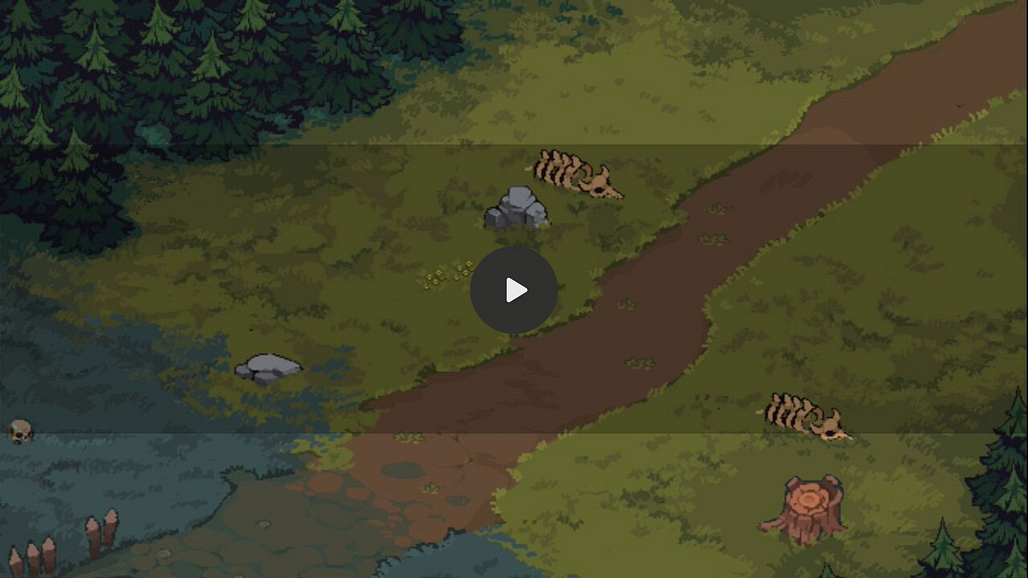
HUNTERTALES LAUNCHES AND…
It might be “Ponzi season” right now, because another Ponzi game just launched (and already failed?). Huntertales (Ht) is the project I’m talking about: “a new kind of collaborative GameFi”, which launched its first season on MegaETH just 3 days ago
Ht is coming from a former team at Defi Kingdoms (DFK). One of the few OG (GameFi 2021 cycle) games that’s still around and kicking
The game tried a different approach to the usual Ponzi game model by focusing on team play, which tied progression to collaboration
Ht’s high-level core game loop involved: recruit hunters → deploy hunters to sectors → coordinate with other players → fight sector battles and dynamic events → success: earn bounty + advance/failure: hunters die permanently
Note: This is a simplified version, as there is more depth to the mechanics
Before its S1 release (“The Grand Campaign”), Ht held two events:
In October, it launched its 1-month Pioneers Program. An event focused on a referral mechanism, allowing users to get a headstart on obtaining in-game assets
More recently, on February 10, it launched on MegaETH alongside its Hunter Recruitment event. During this time, players could start opening Hunter Packs, which contained Hunter Characters (ERC-1155 NFTs). There are 3 pack tiers and 6 different rarities for heroes
From the 10th - 17th (until TGE), Hunters passively generated $CROWN tokens. The litepaper mentioned: “… by recruiting Hunters, you're indirectly acquiring CROWN at an implied valuation of $1MM”
Ht raised around $800K from these pack sales before its TGE, equal to around 5,000-6,000 packs sold
The Grand Campaign started last week, on the 20th, and will run for 60 days. Its token, CROWN, TGE’d at the same time
CROWN is the utility token of Ht, awarded to players who win sector battles and used for opening Hunter Packs, purchasing upgrades, entering Boss dungeons, and managing guilds
TGE happened on Kumbaya (a new DEX on MegaETH). The team added $400/$500K ETH in liquidity to the CROWN pair, and the market price started at $0,105 ($1,050,000 valuation)
The game used an interesting mechanic of delaying a portion of their rewards. All players had a CROWN Treasury. To fund these, there was an automatic tax on claiming (hunter) deployment rewards:
“Every time you claim deployment rewards, 15% of your earnings is also credited as Treasury CROWN: a separate, locked balance on top of your liquid payout. You receive both. To access your Treasury, you must unlock and rebuild the Statue of the First Hunter with $CROWN across 10 levels.”
As players’ Hunters fall in battle, these souls unlock a portion of their Treasuries. You could call it a “pity system” to soften the blow of losing Hunters (losing $), so players don’t churn immediately after
CROWN peaked at a $3.2M FDV, around 4 hours after its launch, then entered a death spiral of red candles (a common pattern among these games) and is now trading at a ~$315K market cap (~-70% from its listing price)
From an outsider's view, this downward spiral was largely fueled by players who bought Hunters early on, generated CROWN tokens pre-TGE, and wanted to recoup their “investment” on TGE
This never allowed the loop to form that makes the majority of players risk their assets, and recycle their CROWN in buying new packs (in case their Hunters die). The token chart then becomes reflective of player interest. The lower it goes, the less likely to make a profit, and the more players churn
To my understanding, minters got 7M tokens out of the available 10M tokens on TGE. On the first day, only 1.37M tokens got burned, so I imagine the majority of that excess supply became sell pressure, and there wasn’t enough buying pressure to offset that
Last week, we talked about Cash City collapsing as a Ponzi game (now trading at a ~$250K FDV) and the factors that influence the longevity of these models
One addition I would make to this list is the performance of the token it's nominated in (e.g., ETH in Ht’s case), closely related to market sentiment, but more specific
So, when ETH (or SOL) drops in value or is historically trading at low levels (like now), users become more conservative, delay spending, and are more likely to exit.
I.e., users will be more inclined to spend when ETH is at $4K than when it’s at $2K, despite spending more in $ value
Lastly, it’s worth pointing out how this isn’t a great look for MegaETH. Despite receiving support from the chain (2 QRTs), which brought a lot of eyeballs to them, and despite being one of the few interesting apps live on MegaETH at the moment, Huntertales couldn’t perform
In contrast, OCH had a much greater impact when it launched on Abstract
KATE SHARES HER VIEWS ON CRYPTO’S IMAGE PROBLEM
Last November, we interviewed Kate Irwin, a journalist who wrote for PC Mag, The Block, and Decrypt, with a keen interest in crypto gaming. Our talk with her hasn’t released yet (video editing…), but I still wanted to share the highlights with you today:
On mass adoption:
“Mass adoption is probably just not going to happen for crypto games in that way that people once thought a couple of years ago […] The reality is that the stigma has not yet changed, crypto game projects put too much focus on shilling to their own communities, and not enough focus on changing broader industry sentiment around NFTs and tokens…”
The space’s path to scale is a mix of rebuilding trust and shifting mainstream perception. Furthermore, it has become clear that the TAM of onchain (crypto-savvy) users isn’t large enough and isn’t growing either, meaning a CT-only GTM strategy will limit your upside potential
Treasury management of crypto game studios:
“Crypto game studios could position themselves financially very differently than they have…some of them have been acting like Web2 studios: okay, we have this amount of money, we’re going to spend it to build the game and on marketing…until we’re almost out of money, and then we’re going to release the game and really hope we sell everything, or maybe they’re selling NFTs or tokens beforehand…”
“I’m not aware of a lot of game projects with substantial treasuries really treating their treasuries and the money that they earn like they’re a hedge fund, and reinvesting that money and staking that money, and being smart about maybe not keeping it all in their token, like diversifying a bit, because at that point you’re trying to reduce risk…”
While blockchain creates additional risk to a business model that is already risky, it also offers financial and distribution tools to derisk bankruptcy, advantages that many studios still underuse
Immutable would be a prime example of how a gaming company can sustain through great treasury management (and investments). As of August 2025, they still held ~$700M in various crypto assets
Crypto’s image and onboarding new users:
“Web3 hasn’t been profitable or lasting as a sector. We’ve seen Coinbase trying to remarket the words Web3 and NFT as onchain […] Some of the new jargon that they’ve created is not going to translate to non-crypto people, unless you sort of handhold them through it…What does building a tokenized onchain community even mean?…”
Instead of naming and renaming concepts using crypto jargon, try to introduce meet your users with terminology they already understand. A good example of this is Cambria’s rebrand from crypto- to real-money gaming
“So I think Web3 was one of those things as well, a great buzzword for the 2021/2022 NFT boom that we saw, but from a traffic standpoint and in journalism…we have been avoiding terms like that, because it’s just not a term that people search for…And that word doesn’t mean a lot to non-crypto people after all those years, and crypto-native people think…that’s the 2022 FAD that’s not profitable”
“Web3” (gaming) not only has a negative connotation and little meaning, but it’s also not optimized for SEO. Simply look at the Google Trends data when you compare it to the search term “crypto” (gaming)
“When it comes to marketing and getting more people onboarded, the simpler the better…”
Why she remains excited about crypto:
“For me, this new wave has been really interesting, watching the rise of a new kind of SocialFi, where it’s not just like Friend.tech, where it’s this max-extract hype cycle, but it’s more about long-term decentralized social platforms and social trading…We’ve upgraded, it’s not just all like chaotic PFPs and really bad games. We’ve all raised our standards…”
Crypto is just a big economy:
“EVE Frontier is another one that’s serious about economies. Sometimes, some folks in crypto forget that all of crypto is just the economy…but another version of it. We all need to be good at economics…we all need to understand finance to understand crypto”
We thank Kate for coming on the show and sharing her insights on crypto’s image problems. Next time, we’ll have Kam on. This conversation will focus on Fableborne’s reflections on S4 and TGE, and where the studio is heading next

ON THE RISE
Disclaimer: None of this information should be taken as financial advice. My writings only represent my personal opinions. DYOR. I will hold some of the assets mentioned in this newsletter.