“Also, gaming on a blockchain is not coming back”.
This QRT came from Lily Liu, President of the Solana Foundation, in direct response to Meta announcing the shutdown of the Metaverse. CT’s reaction was a mixed bag of agreement, confusion, and thankfully plenty of pushback.
But before we dive any deeper into Liu’s controversial take, let’s get into the headline itself: Meta’s decision to shut down the Metaverse. Was it actually important to crypto gaming? And if so, by how much?
YGG Play Launchpad just dropped an update.
Redeeming your in-game points for GIGACHADBAT and Waifu Sweeper is now way smoother and faster.
When you hear the word “Metaverse”, you might think about The Sandbox, Decentraland, or any other empty virtual world that raised significant amounts of money through the sale of “digital land” in 2021–2022. Outside of crypto, people will probably think about Facebook and how it was renamed to Meta.
“A massively scaled, interoperable network of real-time rendered 3D virtual worlds that can be experienced synchronously and persistently by an unlimited number of users, featuring an individual sense of presence and continuity of data, such as identity, history, entitlements, objects, and payments.” ~ Matthew Ball 2020
Crypto’s version of the Metaverse never achieved the vision described above, and frankly, traditional gaming didn’t either. Ball’s description was simply “hopium”. However, that’s not to say that Roblox is probably the closest title to the idea of the Metaverse we have ever had. Ball often describes Roblox as a foundational example of a Metaverse platform, rather than a complete Metaverse in itself.
While the Metaverse and crypto gaming aren’t as connected anymore, the industry gained footing based on this idea in 2021–2022. At the time, Zuckerberg described the Metaverse as the “embodied internet” in which everyone would use AR/VR devices to be connected, changing how people interact with each other and the world.
Much like the (dystopian) state of the world in WALL·E, or more in a VR/AR context in Ready Player One.
From WALL·E the Movie (2008)
The Metaverse as the future would also mean one’s “digital being”, which I describe as a persona and its possession, would be incredibly important. So, how does someone, seeing the gravity of the importance of this shift, bet on it? Digital real estate.
The pitch (in crypto) was simple, and along the lines of:
Obtain full control and ownership of a digital piece of land
Monetize the land by building games, casinos, shops, events, social hubs, etc.
Land is scarce, with only X amount of plots with location-based value
There will be a secondary market to tie in economic incentives
Decentraland was one of the first to successfully commercialize this opportunity, as it raised $26M through its ICO and first sale of digital land in 2017. This was years before Zuckerberg used the word “Metaverse” publicly.
“Decentraland provides an infrastructure to support a shared virtual world, also known as a metaverse.” ~Decentraland’s Whitepaper in 2017
In a sense, Decentraland was one of the frontrunners of the Metaverse cycle that followed (note that the term “Metaverse” is 33 years old and stems from a book called “Snow Crash” from 1992). This fact adds to the idea that crypto gaming is deeply connected to this movement.
Other projects, early to the sale of digital real estate, were Cryptovoxels (now Voxels) and The Sandbox. In 2021, after “The Zuck” legitimized the Metaverse, retail barged in, and these sales exploded. Examples include Axie Infinity, Otherside, Star Atlas, Bloktopia, and many others. Primary sales of virtual land exceeded $1B.
Today, now that the Metaverse has “fallen” (and frankly been dead for a couple of years), it’s comical to look back at the mania behind it. The tweet from Peter Girnus below is a great shitpost with a good amount of satire, capturing the irrationality of it:
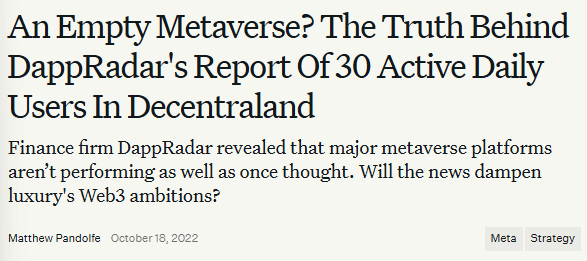
“A guy in my Discord paid $2.4 million for a 618-parcel estate in Decentraland. Prime district. High foot traffic. I asked him what "foot traffic" meant when the platform had 38 daily active users.”
The Metaverse was the largest driver behind speculative capital entering crypto gaming to date (and to be frank, we can largely attribute the success of NFTs to it). Yet, today it’s a burden. Even though the industry moved away from building empty virtual worlds with hefty land sales, the two are still closely associated in the eyes of (non-gaming) crypto and retail. We’re essentially fighting against the stigma of still being the same “multi-billion-dollar-fugazi-real-estate-fiasco.”
Was the Metaverse a good thing?
This brings us to the next chapter of this conversation: would crypto gaming look better or worse today if the Metaverse cycle were not happening? Let’s look at both sides of the argument.
Financial Bubbles → Misaligned Incentives
A financial bubble is a period in which asset prices detach sharply from their intrinsic value and are driven instead by speculative demand. The gap between these two prices is the “speculative premium” that accounts for the potential future value of that given asset.
The euphoria behind the Metaverse led to a huge wave of speculative capital flooding in, long before the underlying idea, product, or asset class had proven itself (found PMF). We saw this with the astronomical increase in the prices of digital land in 2021–2022, even though the worlds themselves were boring and empty.
The fact that these soulless experiences were able to raise $10Ms through retail and/or venture capital created a huge incentive for other projects to turn to a land sale, without having to care much about game development. To hop on the bandwagon, projects started to frontload sales, years before they could realistically release a playable product.
A good example of this is The Otherside’s Otherdeed sale, which raised hundreds of millions of dollars in April 2022. The persistent live version of the game only launched in November 2025, over 3 years later. Have you ever met someone who likes to play the Otherside without being financially incentivized?
Rippling Effects
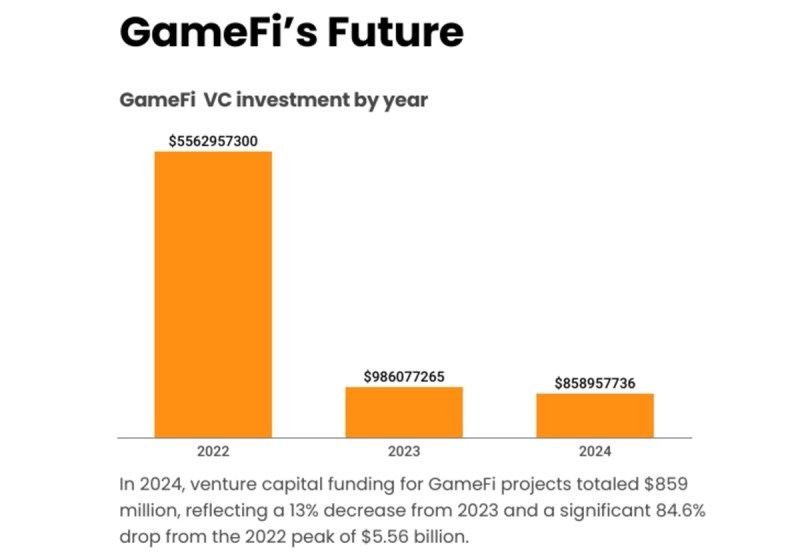
This funding spree of venture capital (as shown below) not only reached the Metaverses but also expanded to the whole sector of “GameFi”. For instance, I believe that Axie Infinity never would’ve achieved the size it did without the Metaverse. Note that the term was thrown around loosely as well, as any virtual world could be considered a Metaverse if you looked at it from the right angle.
A couple of years back, it was relatively easy to raise a sizeable round ($5M+) through only a pitch deck if you used the right cluster of buzzwords. We all know now how much of that capital was put to use to push this industry forward (close to 0%).
“Zombie Companies”
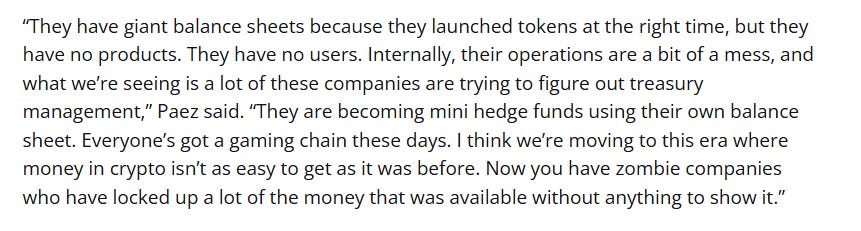
Companies like The Sandbox still have considerable treasuries, simply because they raised such enormous amounts of capital through venture, NFT, and token sales. Many of these projects are now operating more like mini hedge funds, trading off their own balance sheets rather than building games. Daniel Paez described them as “Zombie Companies”.
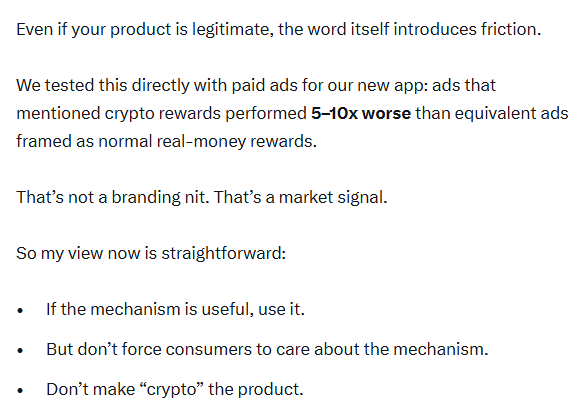
As mentioned, crypto gaming as a category and term is still fighting the stigma of “empty worlds, capital misallocation, and scams.” A recent experiment by Luke Barwikowski (CEO of Pixels), which I mentioned in this newsletter before, illustrates how much friction crypto introduces.
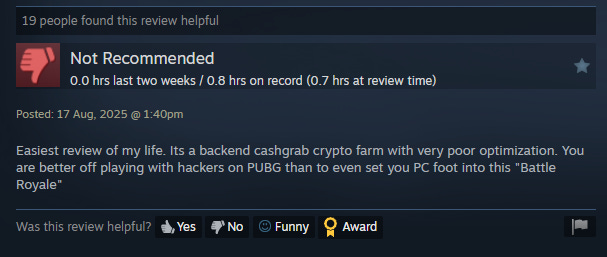
Furthermore, one can sense this negative connotation by reading through the reviews of the majority of Steam pages for crypto games. Even though the pages don’t mention the words “crypto” or “NFT”, players will often find out and center their review around its connection to blockchain. I would add that it is the worst with PC games built for Western audiences, as in the example of Off the Grid.
An argument in favor of the Metaverse being a positive outcome for crypto gaming is that the bubble-sized injection of funding justifies its existence as a category today. Without the Metaverse, billions of this speculative money wouldn’t have flowed into (adjacent) projects, infrastructure, and tooling that keep up this industry today. Investments that sped up the adoption curve.
The strongest example of this would be Sky Mavis’ $152M round in late 2021 at a $3B valuation. Without the success of Axie Infinity, fueled by the broader Metaverse wave, this wouldn’t have been possible. This money was later used to develop Ronin. Even if you question Ronin’s existence today, you can’t downplay its overall importance in contributing to what crypto gaming is today.
Note: while the upcoming P2E can be attributed to a mixture of novelty and timing (during Covid), its existence is closely tied to the Metaverse. Axie Infinity didn’t lead with it, but embraced it, and used the label in their own words as part of their GameFi positioning.
Furthermore, there are still a handful of studios building today that were only able to raise because of the trickle-down effects of the Metaverse funding spree. Even though we have yet to see most of these “survivors” make a notable contribution today, and this cohort is shrinking, it’s “the last stronghold” of crypto gaming.
Overall, it wouldn’t be too far-fetched to say that crypto gaming would be considerably smaller if it weren’t for the Metaverse. But I’m sure people would disagree with me here.
Funding → Attracts Talent
The billions of dollars poured into the industry legitimized it, which attracted bad actors, as mentioned, but also talented developers from Web2. Despite many of these teams’ contributions being “unfruitful” (e.g., Homa Games, Ubisoft, Pirate Nation, a handful of Korean and Japanese legacy studios, and many more), there are still teams with veteran gaming experience building here today.
Another way you could look at Metaverse funding is as expensive “learning money”. The funding came in at a speed and scale that organic growth couldn’t ever have replicated. Post-crash, the failures were so enormous and obvious that the industry was forced to confront what didn’t work (note: to what degree some of these learnings were applied is another matter). Similar to how other bubbles have led to breakthroughs in R&D.
Some of the largest areas of learning include:
Incentive design
Tokenomics and game economies
UI and UX
Crypto-abstraction
Scaling
Crypto gaming is a “graveyard of failures.” And without these failures (accelerated by the Metaverse cycle), I believe the industry wouldn’t have progressed as far as it has today. It forced technical innovation.
The Bottom Line
If the Metaverse cycle had not happened, crypto gaming would likely look “less big” but “more credible” in 2026. Here’s my interpretation of it:
The Metaverse hype justified crypto gaming as a category, attracted talent, and forced technical innovation. However, it did so by funding and publishing many projects that had misaligned incentives, which led to a reputation we’re still dealing with today.
Without the Metaverse cycle, crypto gaming’s path would likely have been slower, P2E would’ve been much smaller, but there would be less self-inflicted pain as well. In this scenario, the outlook for the industry would’ve likely been better.
“Also, gaming on a blockchain is not coming back”
Now, we’re back to where we started, with Liu’s (infamous) quote. We looked at what the Metaverse is, what it means for crypto gaming, and what it would look like today without its existence. So, let’s address Liu’s commentary that focuses on what’s beyond.
I don’t know whether her post is rage or engagement bait or whether she actually believes this. Nor do I understand the incentive or need to shoo away and discredit game developers on Solana. However, for our own sake, we can reframe the statement into: “Gaming on a blockchain as the only value proposition is not coming back” (I stole this, but can’t find a source for this quote anymore, sorry, anon).
So, what can we look forward to when it comes to crypto gaming in a world where the Metaverse is now (completely) “dead”?
The Financialization of Gaming
When speaking of the future of crypto gaming, there’s a view in which gambling and gaming don’t disappear, but rather continue to converge.
At first glance, this sounds similar to the Metaverse cycle, a future that’s still driven by speculation. However, the key difference is that speculation was the product. In the next wave, it becomes part of the experience, designed to enhance the experience, rather than replace it.
In response to Liu’s post, Beanie replied with a contrary view, which included the following quote: “Got a secular gambling tailwind. Financialization of gaming is a mega trend.”
This points to a broader shift towards more speculative, risk-taking, and betting-like behavior (long degeneracy!). In this context, crypto gaming is aligned with this trend to become the “frontier of financialized entertainment”.
The next wave, financializes behavior (from bug → feature)
But why gaming? When looking at gambling (-adjacent) products such as prediction markets, memecoin launchpads, and perpetuals, we see a common behavior. People continue to use these products, not because they’re winning, but because they believe they can win (believe they have an edge).
Statistically speaking, if every user churned after the 1st time of losing money on Pump Fun, the platform wouldn’t have any users left. Prediction market traders are also losing their stakes at a higher rate than sports bettors.
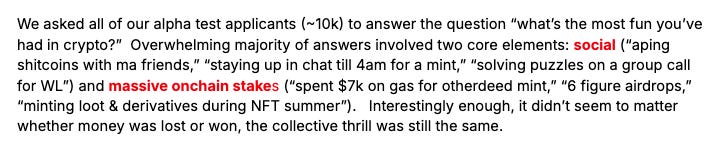
My point is, the fun lies in the competition to make money, not “only” winning money. And this doesn’t even mean the most rewarding, but the loops that make this competition engaging, skillful, repeatable, and socially meaningful. Gaming is the best wrapper to capture that competition.
From Ben in his piece “The Thesis For Degen Gaming”: ”With financialized entertainment, there’s no obligation to create any tangible value outside of the fun, especially since the underlying economics of these products are zero-sum, by technical nature (wHo iS ThE mArgINAL buYeR).”
I recommend reading Ben’s thesis if you want to read up on a compelling bull case for gaming’s position within financialized entertainment.
One of the clearest examples of the above already exists, just not in crypto.
“Rewarded play” is a form of financialized entertainment that’s (eerily) similar to P2E, but lives in Web2. In Web2, this mostly looks like: play 5 different games and reach certain milestones, watch a couple of dozen ads, and when you have enough coins, you can convert them into a $10 Amazon Gift Card.
It’s financialized gaming at its core, but in a controlled environment. The rewards are capped and predictable, giving the developers a clear picture of what the return is on the reward spend (but in this case, ad or partner revenue).
Since the hook of crypto gaming is virtually the same (but better), my thesis is that this is “the” potential pocket of growth for crypto gaming to expand to the normies.
A recent example of “rewarded play” we discussed in detail is Cash Apples, from the (non-crypto) wallet app Cash App. After the second day of the game being live, it had to shut down since 350K players tried to get in (the game has since relaunched). Cash App could’ve given away $500K in rewards through many ways, but perhaps they believed that a (simple) game would be the most engaging format to do so.
The TAM of normies that would play to earn something (with a dollar value) is much larger than that of crypto gaming. And again, they’re both P2E. Yet, crypto gaming’s stigma lingers here and has limited its growth in Web2, as shown by the aforementioned experiment of Pixels.
Furthermore, Ben shared the following with us from a Sidelined interview in November: “Crypto is almost like a bad word…to a lot of people, it means Ponzi scheme”. He added that at this point, Cambria isn’t a “crypto game” anymore, and now has to use terminology closer in line with real-money trading (more familiar to the OSRS audience).
Blockchain “Solving” Gaming
On the other hand, we have the view of the underlying blockchain tech pushing adoption for crypto gaming. Within this view, the value will largely shine through in solving existing macro challenges in the broader gaming sector.
One of the major unlocks is blockchain-powered payment rails. In short, these rails reduce the costs of transacting, which improves margins for the developer and, in turn, leaves more money for development or UA.
From our interview with Ethan (Arbitrum Gaming Ventures) on the topic: “When developers see […] hey, I’m building a product, and I’m building it on Web3, I can “make more money”. Because there’s more margin, it’s more efficient, it’s cheaper, I think that has to be the focus that blockchain can solve for gaming…”
On the topics of Bitcoin Miner and payment rails, the Lightning Network enables developers to pay out sub-1-cent nanotransactions, something that simply isn’t possible through traditional fiat rails (and the majority of blockchains).
Other primitives include solutions such as LimitBreak Apptokens, a programmable token standard that gives developers more influence over how their tokens behave. With Apptokens, developers can set customizable rules for how a token is earned, spent, or sold, creating more intentional and balanced economies. I won’t go into it too deeply here. You can read a piece I wrote last year called “Apptokens: The Answer to Solving Broken Incentive Structures?”
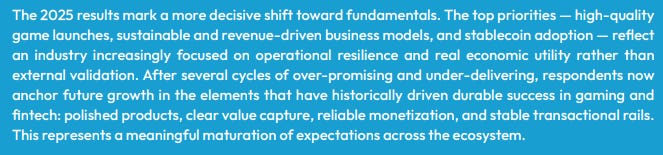
On a similar topic, there are stablecoins, which function like Web2 currencies, but with some added benefits (and some downsides). A core challenge with traditional game tokens is auditability, as these systems aren’t built to answer how tokens were created, how they were spent, who touched them, and who used them. Stablecoins on the blockchain provide this source of truth. We talked about “BGA’s Stablecoins & Gaming Report” in the newsletter below.
Overall, the fundamentals are more about “Web2.5 solutions” than something that is purely Web3 or aligned with crypto’s decentralized ethos. Yet, it isn’t an opposing vision of the “financialization of gaming” view. I see them as complementary.
Financialized experiences will drive demand, while better infrastructure and economics (“the guardrails”) will make that demand sustainable. The Metaverse failed because it had the former without the latter (note: neither did it have the products).
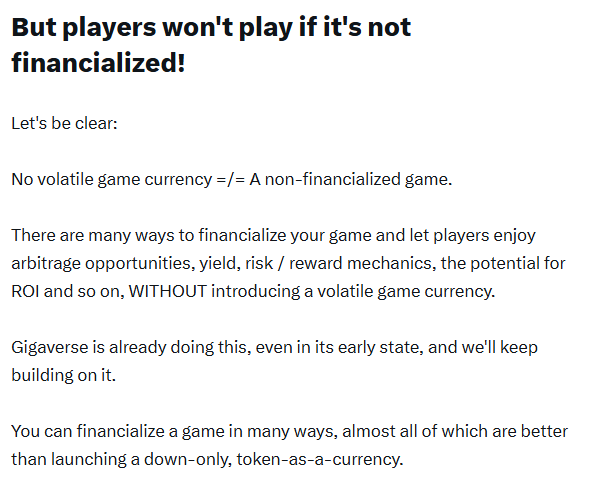
The next wave of crypto gaming will be financialized differently, as explained by this section of Dith’s article:
So yes, Liu is right in the sense that the old “empty world + land sale” (Metaverse) version of crypto gaming isn’t coming back. But that doesn’t mean the whole category of “gaming on the blockchain” is dead. It’s simply changing.
The next wave of crypto gaming will be defined by financialized entertainment that’s actually entertaining, yet wrapped in infrastructure that makes economic sense for both players and builders.
The Metaverse made crypto gaming possible and gave it life, but we’re still fighting the stigma from this period. Now, we need to prove that blockchain-enabled gaming can be more than what the Metaverse showed.
Disclaimer: None of this information should be taken as financial advice. My writings only represent my personal opinions. DYOR. I will hold some of the assets mentioned in this newsletter.